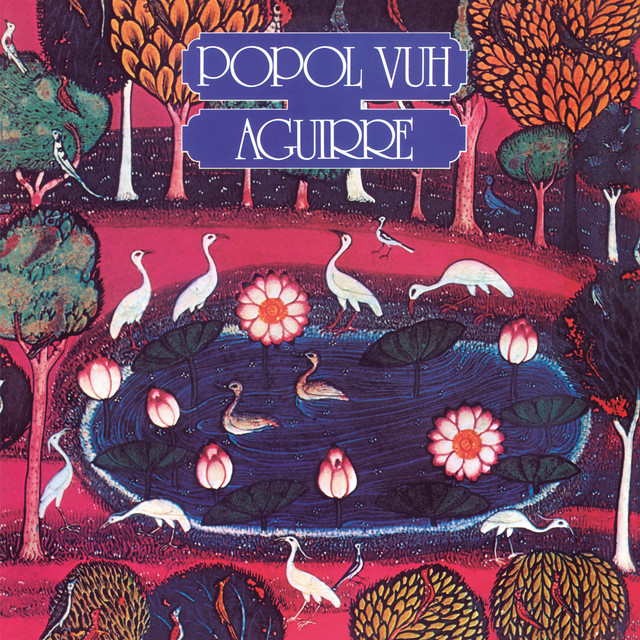
Popol Vuh’s soundtrack for Herzog’s film is pure, untamed atmosphere. And it channels a primal, spiritual energy that transcends mere film scoring, becoming a self-contained journey into the heart of darkness. With its ethereal synthesizers, tribal percussion, and echoing chants, it conjures ancient landscapes and psychological depths. It’s early electronic minimalism used not for clinical precision, but for evocative, almost ritualistic, immersion. The sound wraps around you, a jungle fog.
from “The 12 Unseen Frequencies: Deep Cuts from the Analog Underground” →
Werner Herzog’s cinematic vision found its perfect sonic counterpart in Popol Vuh’s 1972 score. The "Aguirre" theme, with its haunting Mellotron choir and hypnotic guitar cycles, transcends mere soundtrack status. It’s an exercise in ambient dread, a spiritual journey into the heart of darkness conjured through sparse, analog instrumentation. The organic, almost ritualistic feel speaks volumes about capturing mood with minimal, yet profoundly effective, pre-digital studio techniques.
from “8 Subterranean Frequencies That Still Resonate” →
Hearing Handel in a post-hypermodern context? It still goes hard. 'Tamerlano' is pure, unadulterated drama. The vocal acrobatics, the intense emotional stakes, the sheer theatricality—it’s like the original reality TV, but with way better production values. The way the arias build tension and release feels like a blueprint for pop ballad structure. It reminds you that human emotion, expressed with such virtuosity, is always going to be the ultimate drop, no matter the century.
from “9 Drops That Hit Different (You're Welcome)” →